The Cocoa Forge
Pangoa Peru Single Origin Chocolate
Pangoa Peru Single Origin Chocolate
Couldn't load pickup availability
Pangoa — Peru
This bean comes from a small district in the department of Junín called Pangoa, a fertile area within the VRAE region. (Valle de los Rios Apurimac, Ene y Mantaro) (often VRAEM). Its name is believed to be derived from the Asháninca dilect's word pangotsi meaning home or house—a nod to the hospitality of the ancestors of this area. I find notes of fresh raspberry but also a decided citrus note that puts me in mind of Yuzu fruit - but in a gin and tonic! Don't ask how that popped into my head but there it is! So, a fine welcome, Cacao Voyagers, and please join me in a Cheers! to vibrant, beautiful and hard working Peru. Salud Pangoa!
Available in the Large 3 oz Grand Adventure Bar and 0.4 Tasting Tile, dark only (72%).
- Origin: Pangoa, Peru
- Farm: Junín, Central south jungle mountains
- Genetics/Type: Local VRAE Natives and other Natives mixed with Criollos and Trinitarios
- Cacao certifications: Sustainably Sourced, Organic
- Flavor notes: Fruity and floral with jam and herbal notes.
- Ingredients: Cacao, organic cane sugar, organic cocoa butter
From the producer: Mainly made up of Native VRAEs (including VRAE-15 and VRAE-99), Local Natives, and some Criollos and Trinitarios, this bean origin has a flavour profile that leans toward fruity and floral with herbal notes.
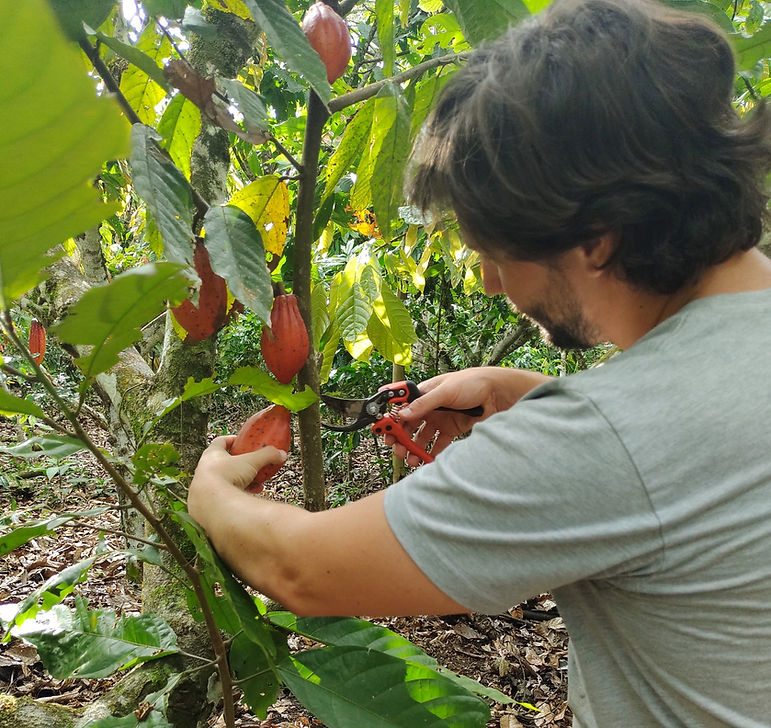
It's farmed and harvested at altitudes of 600-1400 metres above sea level by the Nomatsigenga and Sonomoro Indigenous communities, then fermented in Tornillo hardwood boxes—an exceptional type of wood for fermenting that does not add flavours to the cacao. The fermentation process lasts six days with a bean rotation done every day after the first two days.
After a very well-controlled box fermentation, the Pangoa beans then get transferred to mounds to dry, stirring the mounds for two to four days depending on sun exposure. From there, the mounds are spread out over covered tarps or mesh shelves where they finish drying in the shade. The total drying process typically takes around seven days but can vary due to cloud cover and weather conditions.
Aside from its unique flavour profile, what makes this bean intriguing is the role it's played in reshaping the Pangoa region. Historically, this has been an area with considerable coca leaf production—a crop with various medicinal functions that's inextricably linked to the indigenous way of life which, unfortunately, also happens to be the main ingredient in cocaine. As a way of freeing people from the oppressive farming conditions and to disrupt the illicit cocaine supply chain, the Peruvian government alongside other international governments have been incentivizing alternative crop growing, like coffee and cacao.
For over 15 years, this international collaboration has assisted farmers with networking, infrastructure, management, security, and certifications (organic), helping the people of this region achieve more dependable income, more environmentally sustainable farming practices, and a better way of life.
So, when we say this is a “good” bean, we’re talking about more than just taste.
Share